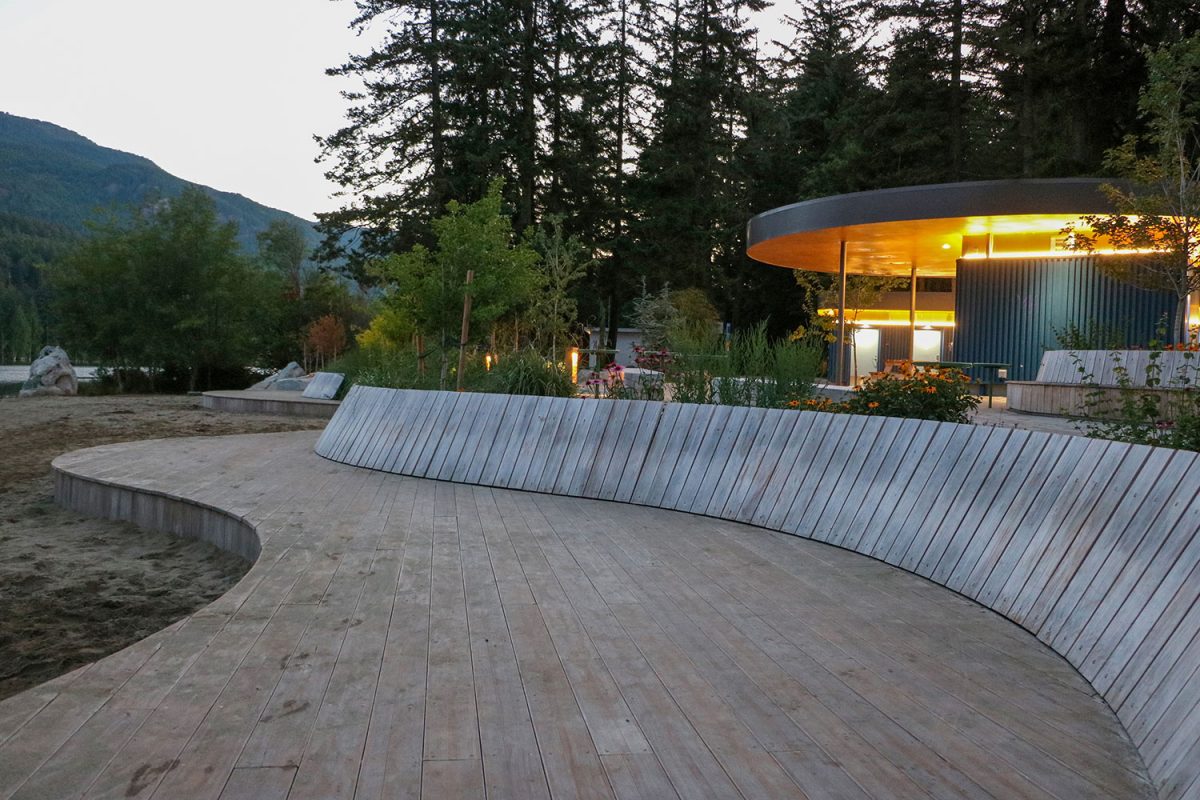
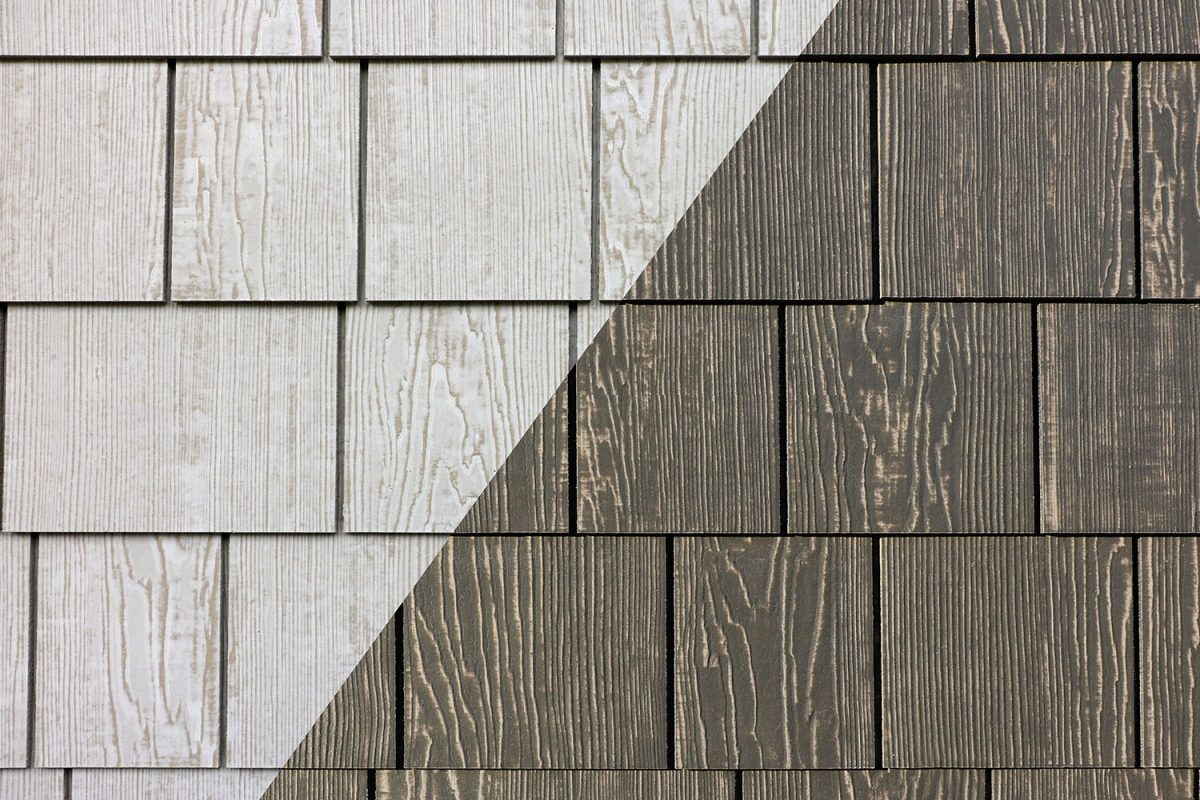
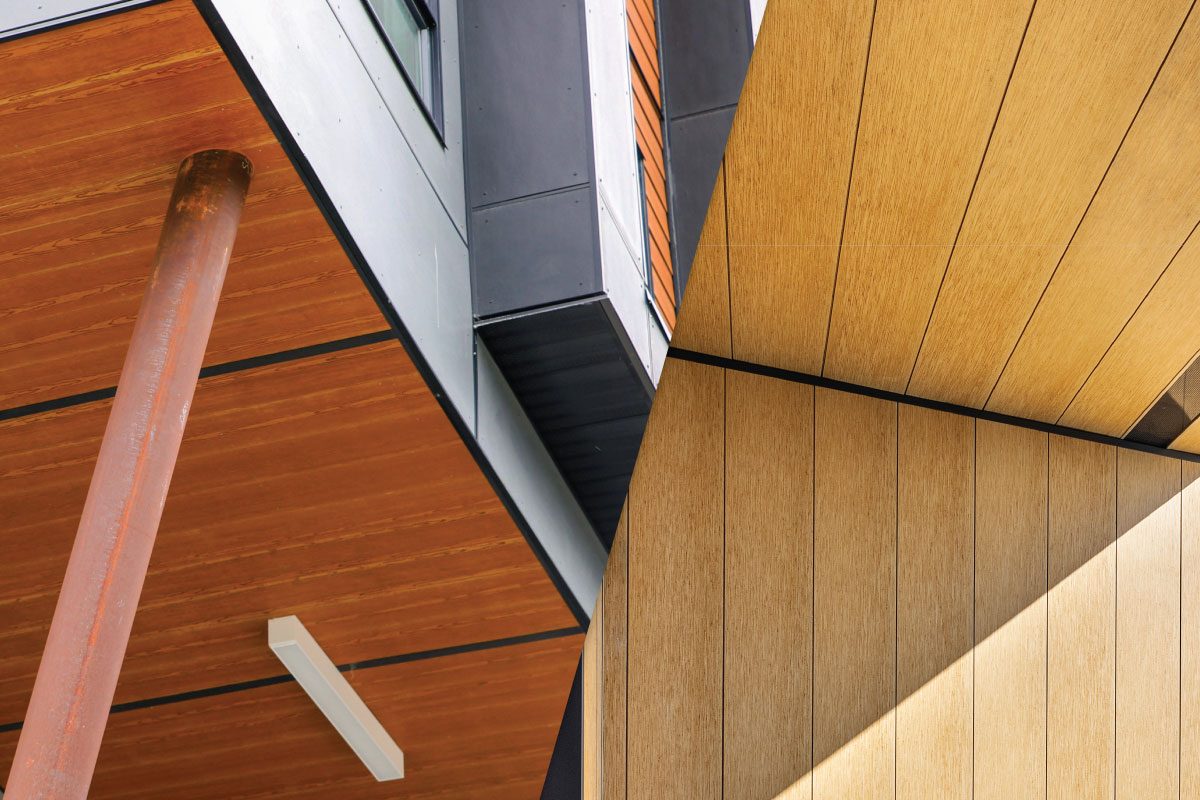
For generations, people in the Pacific Northwest have turned to wood for its warmth, beauty, and connection to nature—a renewable resource woven into the region’s architectural identity.
But untreated timber often struggles with decay, dimensional movement, and durability in exposed environments when not protected or coated properly.
Thermally modified wood offers a compelling middle path: enhancing many of wood’s weaknesses through heat and steam.
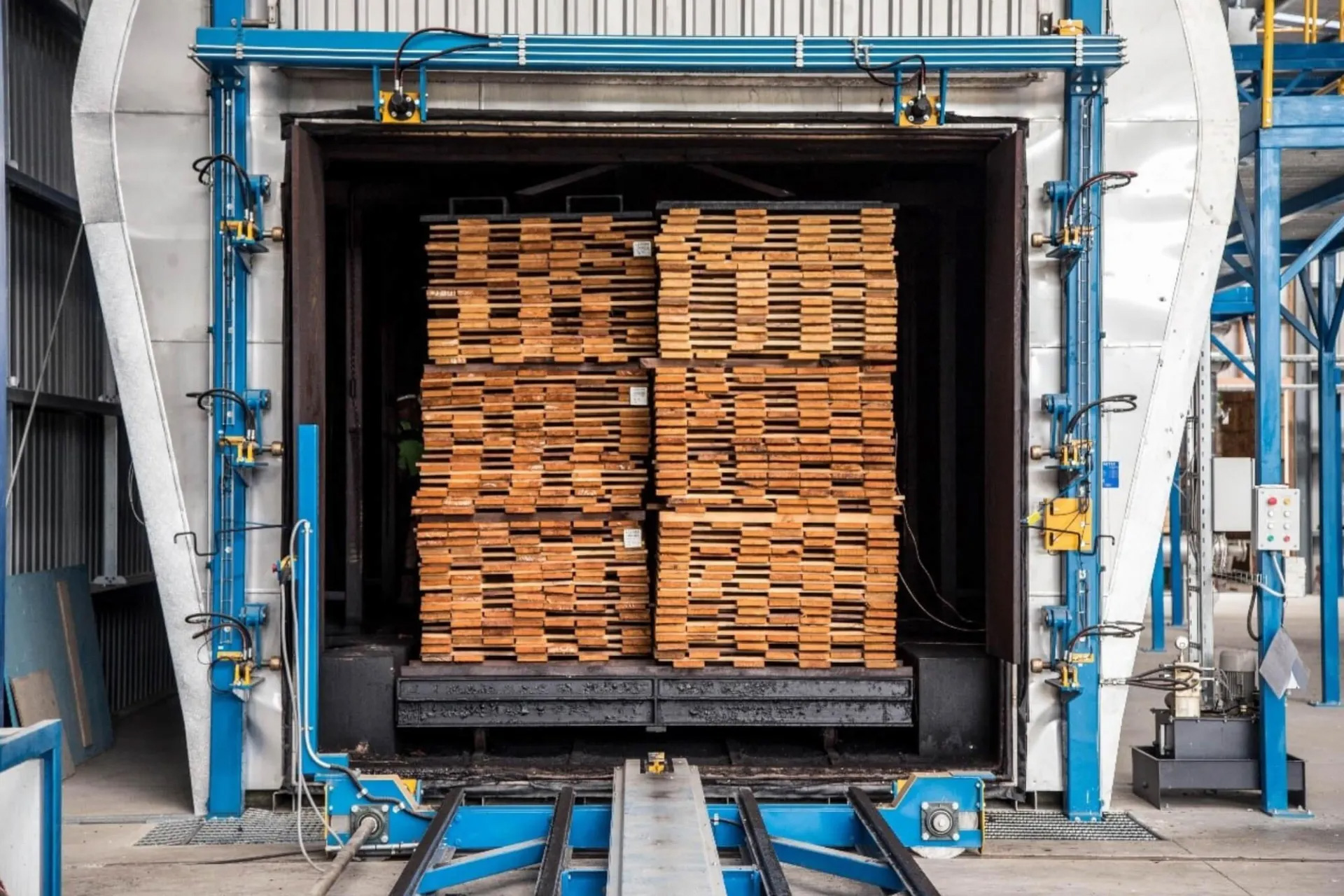
Stages of the Thermal Modification process
Drying & pre-heating
Moisture is reduced to a controlled starting point
Thermal treatment
The wood is held at high temperature in an oxygen-limited environment
Cooling & conditioning
Gradual reintroduction of moisture and stabilization to avoid warping or cracking.
Thermally modified wood is wood that has undergone a controlled heating (often 180°C – 230°C) treatment in a low-oxygen or inert atmosphere (e.g., steam, nitrogen) to alter its internal chemistry.
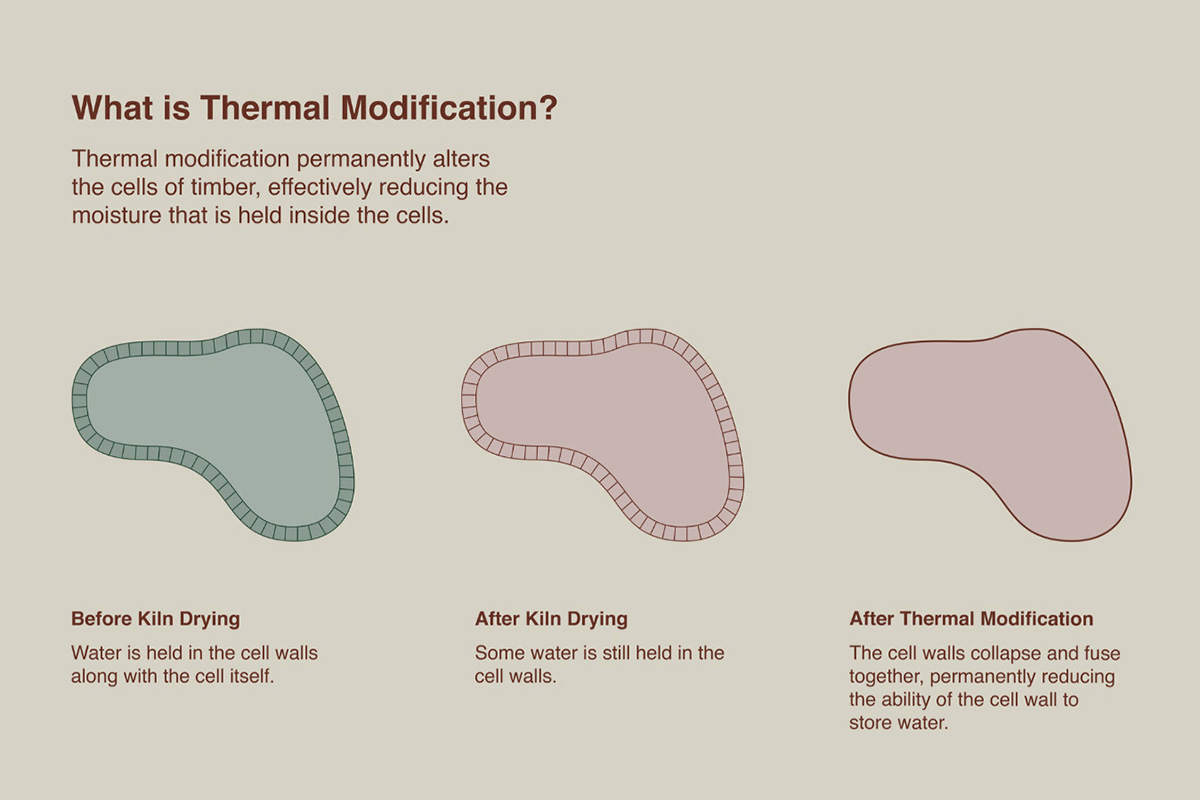
Because of these cellular structural changes, thermally modified wood typically darkens in color and becomes more uniform in tone.
But, not all thermally modified wood is created equal
In this article, we’ll explain the process, benefits, and trade-offs, and then zero in on Abodo’s Vulcan® New Growth Timbers™ to see how it compares to other leading alternatives. (Hint, we selected to pre-finish and distribute Abodo’s timber for a reason.)
Watch the Timelapse Video of Abodo's Thermal Modification Process below.
Key Benefits of Thermally Modified Wood
| BENEFIT | EXPLANATION |
|---|---|
| Improved durability | The thermal process degrades the food sources (e.g. hemicellulose) that fungi and insects feed on, increasing resistance to rot and insect attack. |
| Dimensional stability | Because absorption of moisture is reduced, treated wood swells and shrinks less — leading to less twisting, checking, or warping. |
| Chemical-free treatment | Unlike pressure-treated wood, thermally modified wood products, (like Abodo) no toxic chemical preservatives are needed; only heat and steam. |
| Aesthetic appeal | A stable, rich brown tone emerges through the board rather than a surface coating. Over time it weathers to an even silvery patina. |
| Sustainability & carbon storage | Because the wood retains its carbon, thermally modified wood can “lock in” more carbon than is emitted during manufacture (in some claims). Abodo’s Vulcan timber stores >7.56 kg of carbon per m². The thermal modification process has relatively low carbon emissions, making the final product carbon negative. |
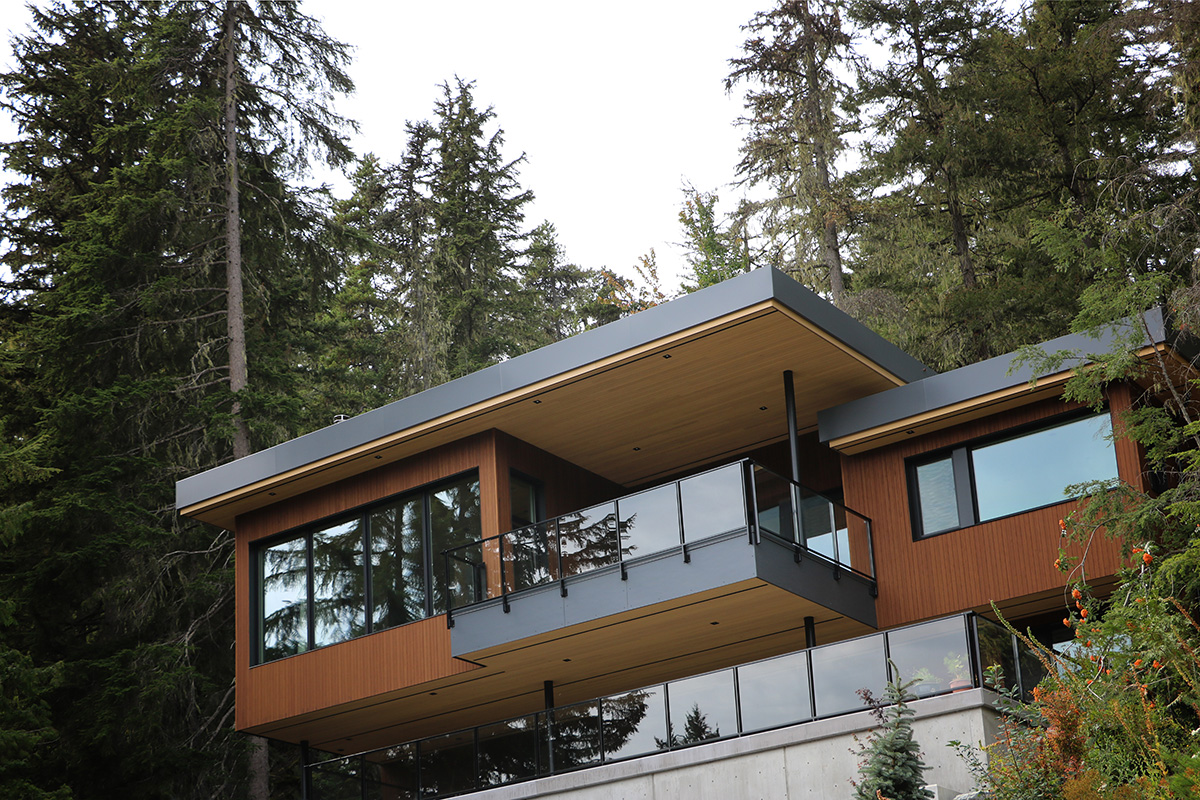
Comparison with alternatives or other thermally modified wood brands.
1. Accoya (acetylated wood)
Accoya achieves exceptional durability and dimensional stability using chemical modification, often exceeding the performance of thermally modified timber in extreme climates. However, its production involves a chemical process that requires careful handling, whereas Abodo relies purely on heat and steam. In terms of carbon storage, both products lock in CO₂, though Abodo’s EPD provides specific quantified data.
2. Kebony® (furfurylated wood)
3. Thermory® / ThermoWood®
These European thermally modified timbers share a similar heat-treatment philosophy to Abodo. However, they differ significantly in raw material sourcing and product engineering.
In contrast, European Thermowood products are commonly produced from Nordic species such as Scots Pine and Spruce, which exhibit natural knot variation and are generally supplied in standard sawn lengths. Abodo, by comparison, sources Radiata Pine from fast-growing plantation forests, allowing for selection of clear vertical grain grades with minimal knots and the production of consistently long board lengths suited to contemporary architectural applications.
Abodo’s local Oceania sourcing further reduces initial transport emissions compared to importing European-modified timbers.
ThermoWood® products are typically supplied as solid sawn sections, whereas Abodo incorporates a lamination process that enhances dimensional stability, straightness, and overall performance. See Vulcan timber’s seven step patented process illustrated below.
Vulcan timber’s seven step patented process
What sets Abodo apart is its proprietary lamination process.
Individual boards are bonded together under controlled pressure and heat, creating a composite that is more stable than solid sawn timber alone. This process reduces twisting, cupping, and bowing over time, while maintaining the visual appeal of natural wood with clear vertical grain. The result is a thermally modified timber that combines the warmth and character of wood with enhanced dimensional stability, making it ideal for long spans, precise architectural detailing, and high-performance applications.
The timber is then heat tempered using heat and steam.
Glue is spread on lamina using a Type 1 exterior polyurethane.
Lamina are laminated with mainly a flatsawn grain orientation.
Spotlight: Abodo’s Vulcan® New Growth™ Timbers — Strengths, Considerations, and Where It Stands
What is Abodo’s offering?
Abodo produces Vulcan® New Growth™ Timber products—including cladding, decking, screening, and panelling—from FSC®-certified Radiata Pine plantations. Each board is thermally modified to enhance durability, dimensional stability, and long-term performance. The Vulcan cladding vertical grain range is available in a variety of architectural profiles suitable for both vertical and horizontal applications, with options for hidden fixing and a selection of finishes and protector colours to boost weather resistance.
Thanks to its thermal modification, Vulcan timber demonstrates superior dimensional stability, with reduced grain lift, warping, and bending compared to untreated wood. The process also reduces resin content, making the timber cleaner to handle during fabrication and more stable across temperature and moisture fluctuations. Abodo supports its products with a 25-year limited warranty, with coverage depreciation ranging from 15 to 25 years, providing confidence for long-term architectural applications.
In addition to performance, Abodo emphasizes environmental responsibility, sourcing from rapidly renewable plantations, maintaining FSC® certification, and quantifying carbon storage within their timber. Vulcan also performs strongly in rigorous mechanical and durability testing when compared to both chemically treated and untreated timbers, providing architects with a material that balances aesthetic appeal, structural performance, and sustainability.
How Abodo Minimizes the Environmental Impact of Shipping
While Abodo timber is shipped around the world, the company actively works to reduce and offset the environmental footprint of its products. Through localized processing, transparent carbon reporting, and a focus on long-term durability, Abodo aims to ensure its timber remains a responsible choice from forest to façade.
Localised Log Processing
Abodo sources sustainably grown Radiata Pine from FSC®-certified plantations in New Zealand. Logs are milled and thermally modified close to where they’re harvested, minimizing transport within the country and lowering associated emissions. This regionalized production approach helps reduce the carbon impact before the timber even leaves New Zealand.
Environmental Product Declaration (EPD)
Abodo has developed a verified Environmental Product Declaration (EPD) for its Vulcan range, showing that each product stores more carbon than is released during production. According to Abodo’s data, every square metre of Vulcan Cladding stores approximately 7.56 kg of CO₂ equivalent, effectively offsetting a portion of its embodied emissions. This transparency allows architects and builders to quantify the carbon impact of their material choices.
Long Service Life and Durability
Abodo’s thermal modification process enhances stability and resistance to decay, resulting in a timber that performs for decades with minimal maintenance. A longer service life means the environmental cost of production and transport is distributed over many more years of use, significantly reducing the material’s overall lifecycle footprint.
Carbon Storage (Sequestration)
Timber is one of the few building materials that actively stores carbon. As Radiata Pine grows, it captures and locks in atmospheric CO₂. That carbon remains sequestered throughout the life of the product—and even beyond if the timber is reused or repurposed. Abodo’s case studies, such as the Cardrona Cabin, demonstrate how these carbon-storing properties can meaningfully offset emissions from transportation and installation.
Specifying Advice & Best Practices for Using Thermally Modified Wood
Detailing & ventilation
Even stable wood needs good detailing—flashing, drip edges, ventilation paths—to manage moisture and weathering.Finish / coating selection
Use UV-resistant stains or oils when desired; consider recoating intervals. Some systems offer factory-applied finishes to extend life.Avoid direct contact with ground or prolonged wetness
Even with improved durability, avoid scenarios of constant saturation (splash zones, soil contact).Allow for thermal movement
Provide expansion gaps in long runs; design for seasonal movement, albeit reduced.Mockups & sample testing
Always test coating appearance under real site conditions, especially if color is critical.Maintenance schedule & inspection
Plan for periodic maintenance, cleaning, and touch-ups. Even high-performance woods benefit from care to preserve appearance and prevent localized degradation.
Takeaway for Specifiers
Abodo stands out for combining chemical-free thermal modification, durable and beautiful timber, and a strong carbon storage profile. While no product is entirely neutral when shipped globally, Abodo mitigates environmental impact through localized processing, long service life, and transparency via its EPD.
For architects and builders in the Pacific Northwest or elsewhere, Abodo offers a high-performance, visually appealing option that balances sustainability, performance, and design.
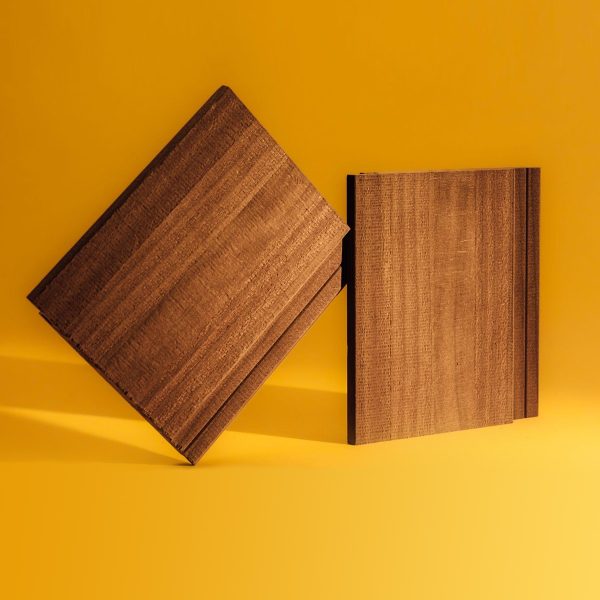

Thermally modified wood cladding that stands the test of time with sustainability.
Fisher proudly pre-finishes and distributes Abodo® New Growth™ Feature Timbers—sustainably sourced from New Zealand plantations.
Do you appreciate Abodo’s timbers and values but want a more cost-effective thermally modified cladding option?


Thermally modified flatsawn wood for siding, soffit, panelling & decking
Imbue™ is flatsawn Radiata pine, thermally modified to enhance its natural durability and stability, creating sustainable materials built to last.
This heat-treated wood cladding is available in both Imbue™ and Imbue™ Light, each with a curated collection of program colours selected by Fisher’s coating specialists.